
Eye Associates Northwest — Glaucoma
Protecting Your
Vision from Glaucoma.
Glaucoma is a pattern of optic nerve damage that in most cases causes no symptoms until late in the disease. Our team focuses on early detection and lowering eye pressure to protect your optic nerve.
- Risk assessment based on family history, age, and other factors
- Treatment options from eye drops to Minimally Invasive Glaucoma Surgery (MIGS)
- Laser treatment available for both open and narrow angle glaucoma
Is This Right for You?
Am I a Candidate for Glaucoma?
Glaucoma often shows no early symptoms, so these risk factors matter. If any of the following sound familiar, it may be time for an evaluation.
Risk factors matter: Risk factors for glaucoma include family history, prior ocular trauma, age over 60, chronic steroid use in any form, and African or Hispanic ancestry.
The Condition
What Is Glaucoma?
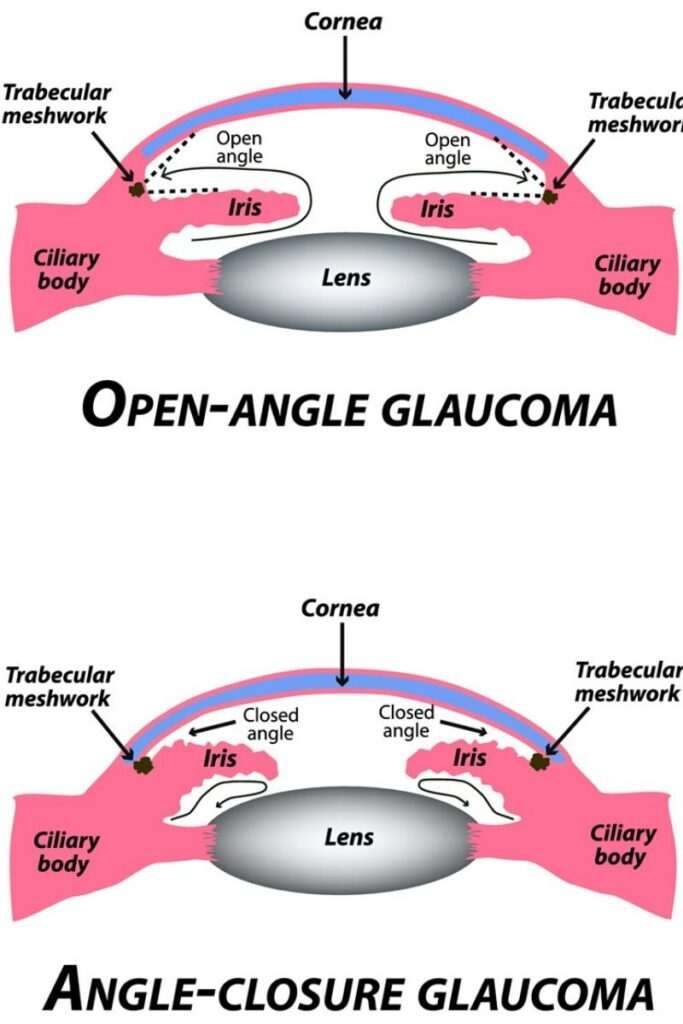
Glaucoma is a characteristic pattern of optic nerve damage that, in most cases, causes no symptoms until late in the course of the disease. The mainstay of treatment is lowering intraocular pressure to a level at which further optic nerve damage does not occur, a target pressure that varies by patient and the status of the optic nerve. In open angle glaucoma, the drainage angle remains open but functions poorly, and treatment options include trabeculoplasty, topical or oral medications, or outpatient surgery such as MIGS, trabeculectomy, or glaucoma shunt surgery. In narrow angle glaucoma, the iris sits too close to the eye’s drainage structures, elevating pressure, and an office-based laser peripheral iridotomy is generally recommended.
Selective Laser Trabeculoplasty (SLT)
For open angle glaucoma, selective laser trabeculoplasty (SLT) is an in-office laser treatment that improves drainage through the eye’s natural drainage system, helping to lower eye pressure. It’s often used as a first-line treatment alongside or in place of eye drops, and its effects can be repeated if they wear off over time. Learn more about SLT.
Often No Symptoms
Most cases cause no symptoms until late in the disease
Individualized Target
Target eye pressure set specifically for your optic nerve
Drops to MIGS
Full range of treatment from eye drops to minimally invasive surgery
Lifelong Monitoring
Regular follow-up is essential since glaucoma has no cure
Patient Reviews
Two Main Types
Open Angle vs. Narrow Angle Glaucoma
The two primary forms of glaucoma involve different mechanisms of eye pressure elevation and are treated differently.
Open Angle Glaucoma
Gradual drainage system decline
- The eye’s drainage angle remains open but drains poorly
- Treated with drops, laser trabeculoplasty, or MIGS
- Progresses slowly, often without symptoms
- Requires lifelong monitoring even after treatment
Most Common Type
Narrow Angle Glaucoma
Physical blockage of drainage
- The iris sits too close to the drainage structures
- Often treated with an office-based laser iridotomy
- The angle can narrow again even after treatment
- May require cataract surgery or iridoplasty in some cases
Less Common
Your evaluation, including imaging of the eye’s drainage angle, determines which type you have and the appropriate treatment path.
Step by Step
Your Glaucoma Care Journey
From diagnosis to long-term monitoring.
1
Evaluation
- Eye pressure measurement and optic nerve exam
- OCT imaging of the optic nerve and drainage angle
2
Diagnosis
- Determination of open angle vs. narrow angle glaucoma
- Establishing your individual target eye pressure
3
Treatment
- Eye drops or laser trabeculoplasty started as first-line treatment
- MIGS or other surgery considered if needed
4
Long-Term Monitoring
- Regular pressure checks and optic nerve imaging
- Treatment adjustments as your condition changes over time
What to Expect
Expected Glaucoma Outcomes & Recovery
Because glaucoma is managed rather than cured, outcomes depend on consistent long-term monitoring and treatment.
What Patients Can Expect in the First 30 Days
- Eye drops require consistent daily use to be effective
- Laser treatments are typically performed in-office with minimal downtime
- Some MIGS procedures are combined with cataract surgery
- Follow-up visits scheduled regularly to track eye pressure and optic nerve health
- Narrow angles can recur even after a successful iridotomy
Informed Care
Safety & Risk Considerations
Glaucoma treatments range from eye drops to surgery, and each option carries risks your doctor will discuss based on your specific treatment plan.
Safety Profile
- Most patients are managed successfully with drops or laser treatment before surgery is considered
- MIGS procedures are designed to be less invasive than traditional glaucoma surgery
- Regular monitoring allows treatment to be adjusted before significant vision loss occurs
Possible Side Effects
- Eye redness or irritation from glaucoma eye drops
- Temporary discomfort after laser treatment such as iridotomy or trabeculoplasty
- Risk of the angle narrowing again even after a successful iridotomy
How We Minimize Risk
Individualized Target Pressure
Treatment goals are set specifically for your optic nerve, not a one-size-fits-all number.
Stepwise Treatment Approach
Treatment typically starts with the least invasive effective option and escalates only as needed.
Regular Optic Nerve Imaging
OCT imaging helps detect subtle changes before they become significant vision loss.
Why Eye Associates Northwest
What Sets Our Glaucoma Program Apart
Comprehensive care from early detection through advanced treatment.
Individualized Risk Assessment
We factor in family history, age, ancestry, and steroid use to assess your specific risk.
Full Treatment Spectrum
From eye drops to MIGS, we offer a full range of glaucoma treatment options.
Long-Term Relationship
Because glaucoma requires lifelong monitoring, we prioritize continuity of care over time.
Our Team
Our Glaucoma Care Team
Optometrists and an ophthalmologist focused on early detection and long-term glaucoma management.



Find Us
Glaucoma in Seattle & the Puget Sound
Glaucoma evaluations and treatment are available at our Seattle-area locations.
Coverage & Financing
Cost & Insurance
Because glaucoma is a chronic medical condition, evaluation and treatment are typically billed to medical insurance.
Insurance Coverage
Glaucoma evaluation, imaging, and treatment are billed as medical care rather than routine vision services.
- Glaucoma screening and diagnostic imaging
- Medication management and laser treatment
- Surgical coordination for MIGS or other procedures when needed
- Billing support through our office
Eye Associates Northwest bills most major medical insurance plans, including Medicare and Medicaid; contact your carrier to confirm your specific coverage.
Self-Pay Options
For care outside your specific coverage, we keep the payment process simple.
- Pricing reviewed before treatment begins
- Multiple accepted payment methods
- Prompt-pay discount for qualifying patients
- Billing office available for questions
We accept cash, checks, Visa, MasterCard, American Express, and Discover, with a 15% prompt-pay discount for qualifying self-pay patients.
Insurance & Payment Made Simple. We bill most major medical and vision insurance plans, including Medicare and Medicaid. Patients without insurance coverage receive a 15% discount when paying in full the same day. Our billing team can answer questions about your specific coverage before your visit.
locationsCommon Questions
Frequently Asked Questions
Questions patients often have after a glaucoma diagnosis or referral.
Will I lose my vision from glaucoma?
With early detection and consistent treatment, most people with glaucoma retain functional vision throughout their lives. The goal of treatment is to prevent further optic nerve damage.
Do I need surgery for glaucoma?
Not necessarily. Many patients are managed successfully with eye drops or laser treatment such as trabeculoplasty; surgery is generally reserved for cases where these are not enough to control eye pressure.
What is a laser peripheral iridotomy?
It is an office-based laser procedure used to treat narrow angle glaucoma by creating a small opening in the iris to improve fluid drainage.
What is MIGS?
Minimally Invasive Glaucoma Surgery refers to a group of newer, less invasive surgical options for lowering eye pressure in open angle glaucoma.
Does ethnicity affect glaucoma risk?
Yes. African and Hispanic ancestry are established risk factors for glaucoma, alongside family history, age over 60, prior eye trauma, and chronic steroid use. Your doctor will take all of these factors into account when determining how often you should be screened.
Ready When You Are
Schedule Your Free Consultation
Most patients see results within 24 hours. Consultations are available at all four locations, online scheduling takes less than two minutes.